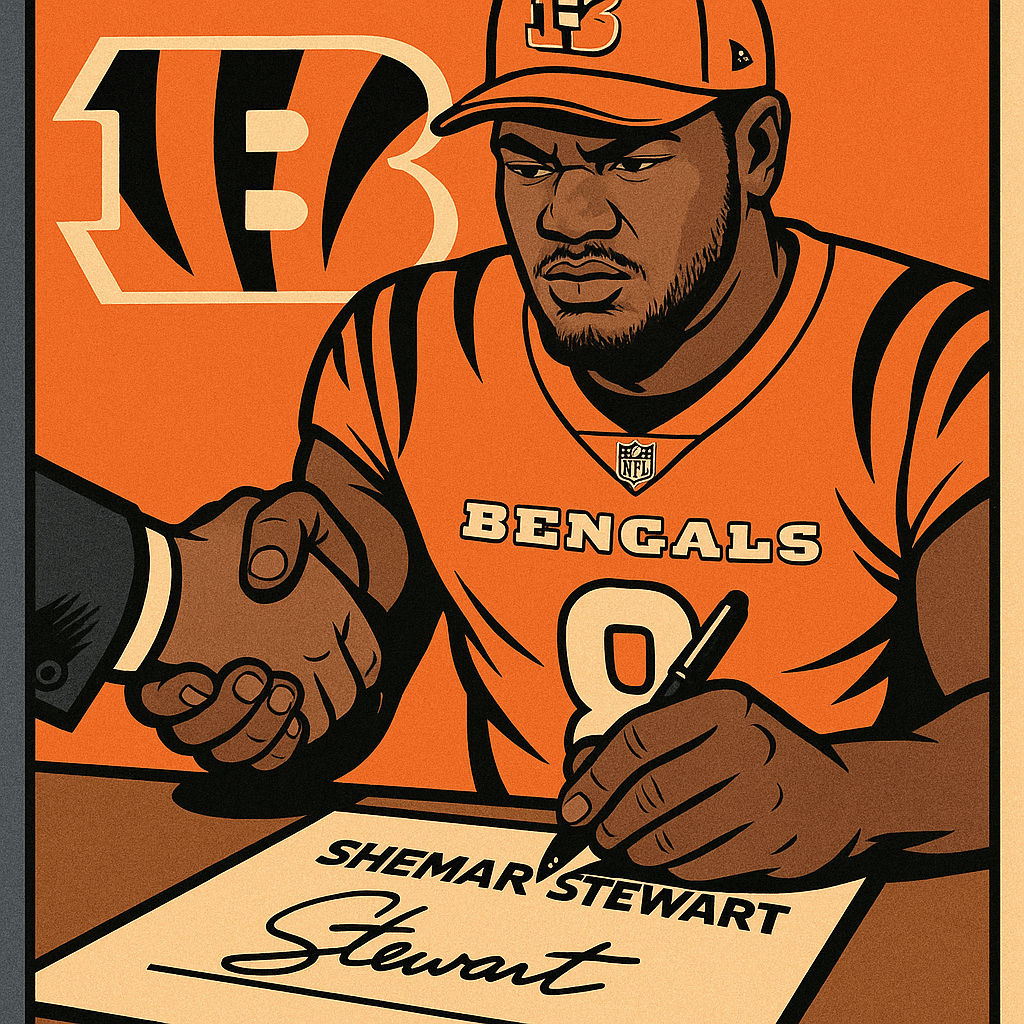
When Shemar Stewart’s rookie contract with the Cincinnati Bengals finally got inked, it marked the end of a tense negotiation phase for the defensive end and the team. For fans tuned into NFL draft drama, the story wasn’t just about signing a promising player but about the new contract language that raised eyebrows. Was agreeing to those clauses a smart, pragmatic move for Stewart, or did he give up too much in pursuit of making the roster?
The Headlines and the Fine Print
The Bengals and Stewart reached an agreement reportedly consistent with the seventh overall pick’s slot value, but with notable tweaks in contract language. As reported by NBC Sports (https://www.nbcsports.com/nfl/profootballtalk/rumor-mill/news/shemar-stewart-and-bengals-reach-agreement-on-rookie-contract), some language around performance bonuses, injury guarantees, and roster bonuses caused the hold-up. The Bengals inserted clauses that some considered more team-favorable, placing additional conditions on Stewart’s earnings tied to availability and performance.
This contract isn’t about the headline signing bonus numbers but the detailed provisions that dictate what Stewart truly pockets. For a rookie—and particularly a high first-rounder—the contract is more than money. It sets the tone for their career, their leverage in future negotiations, and their financial security.
Why Agreeing to the Terms Made Sense for Stewart
Looking from Stewart’s vantage point, groundbreaking rookie contracts are rarely bulletproof. The NFL’s collective bargaining agreement creates a framework that limits leverage for rookies, especially on initial deals. Holding out too long or demanding additional guarantees risks alienating the team and delaying development.
By agreeing to the Bengals’ terms, Stewart ensured he could focus on football without off-field distractions. Rookie contracts are often about earning your spot and proving your value on the field. The Bengals are coming off a Super Bowl appearance and run a disciplined organization; locking in the contract allows Stewart access to elite coaching and infrastructure.
It also embedded incentives that acknowledge his potential and performance. According to agent perspectives (such as those shared on The Athletic), performance-based incentives, while not as immediately lucrative, give players a chance to earn more as they prove themselves. Signing the deal might look like a compromise, but it can be a calculated step toward a longer, more rewarding NFL career.
In addition, the Bengals ensured there were injury protections baked in, which—though sometimes daunting to the player—are a form of security that means Stewart isn’t entirely exposed if something unfortunate happens. The emotional toll of injury uncertainty can cloud rookie decisions, so having some guaranteed elements is a positive.

Potential Downsides: Did Stewart Give Up Too Much?
On the flip side, the new contract language arguably shifts risk back onto Stewart. Roster bonuses and availability-based incentives mean that if Stewart stumbles early due to injury, a slow start, or roster shakeups, his earnings could diminish sharply. Given the physical toll of playing defensive end, and the NFL’s unforgiving injury environment, those clauses can be a real sting.
Furthermore, less guaranteed money up front means less financial security. For many rookies, securing a large guaranteed sum is critical when transitioning from college to professional life. Situations like Stewart’s highlight an ongoing negotiation struggle between player empowerment amid changing market values and team cost control.
Some critics say that by accepting these terms, Stewart’s camp set a new precedent where teams could “push harder” on contract protections, potentially reducing rookie pay across the board. The Bengals, as a rising franchise, may be aiming to maintain financial flexibility, prioritizing team control over player freedom. This pragmatic approach can curb winning payroll wars but might leave players feeling undervalued.
As veteran agents have noted in discussions on ESPN and ProFootballTalk, the balance between guaranteed money and incentives must be carefully managed. While Stewart landed a high draft slot, the contract’s structure looks more like a chess move from management designed to limit downside.
Where Do We Go From Here?
In football, a rookie’s contract is often only a first step. If Stewart can stay healthy and perform at a high level, he can negotiate much better deals down the line. Look at previous Bengals first-round picks who accepted modest rookie contracts but later earned big extensions, such as Joe Burrow. The key is opportunity and a chance to show value.
At the same time, the trend toward tougher contract clauses for rookies raises broader NFL questions about player empowerment and financial security. The collective bargaining agreement may evolve, but for now, players face tough tradeoffs.
For Shemar Stewart specifically, accepting the Bengals’ contract language was likely a pragmatic decision. It secured his chance to join a playoff contender with strong coaching, while aligning with his current value as a rookie. In the years ahead, the physical and professional performance will speak louder than contract language.

Final Thoughts
Signing a contract in the NFL carries more weight than just dollars. For Shemar Stewart, agreeing to the Bengals’ terms might feel like giving a little to gain a lot: stability, a platform, and the chance to prove himself. It wasn’t a perfect deal, but one that fits the realities of being a rookie in today’s league.
Now all eyes are on Stewart to seize the moment—to justify the Bengals’ investment and overcome the contract’s tougher clauses with on-field excellence. That’s the ultimate measurement of whether this deal was a win-win or a cautious compromise.
References:
NBC Sports – Shemar Stewart and Bengals Reach Agreement on Rookie Contract https://www.nbcsports.com/nfl/profootballtalk/rumor-mill/news/shemar-stewart-and-bengals-reach-agreement-on-rookie-contract
ProFootballTalk – The Complex Landscape of Rookie Contracts https://profootballtalk.nbcsports.com/2023/05/01/the-complex-landscape-of-rookie-contracts/
ESPN – Rookie Deal Dynamics and Player Empowerment https://www.espn.com/nfl/story/_/id/33174815/rookie-contracts-nfl-player-empowerment




 NFL FOOTBALL NEWS
Leave a comment