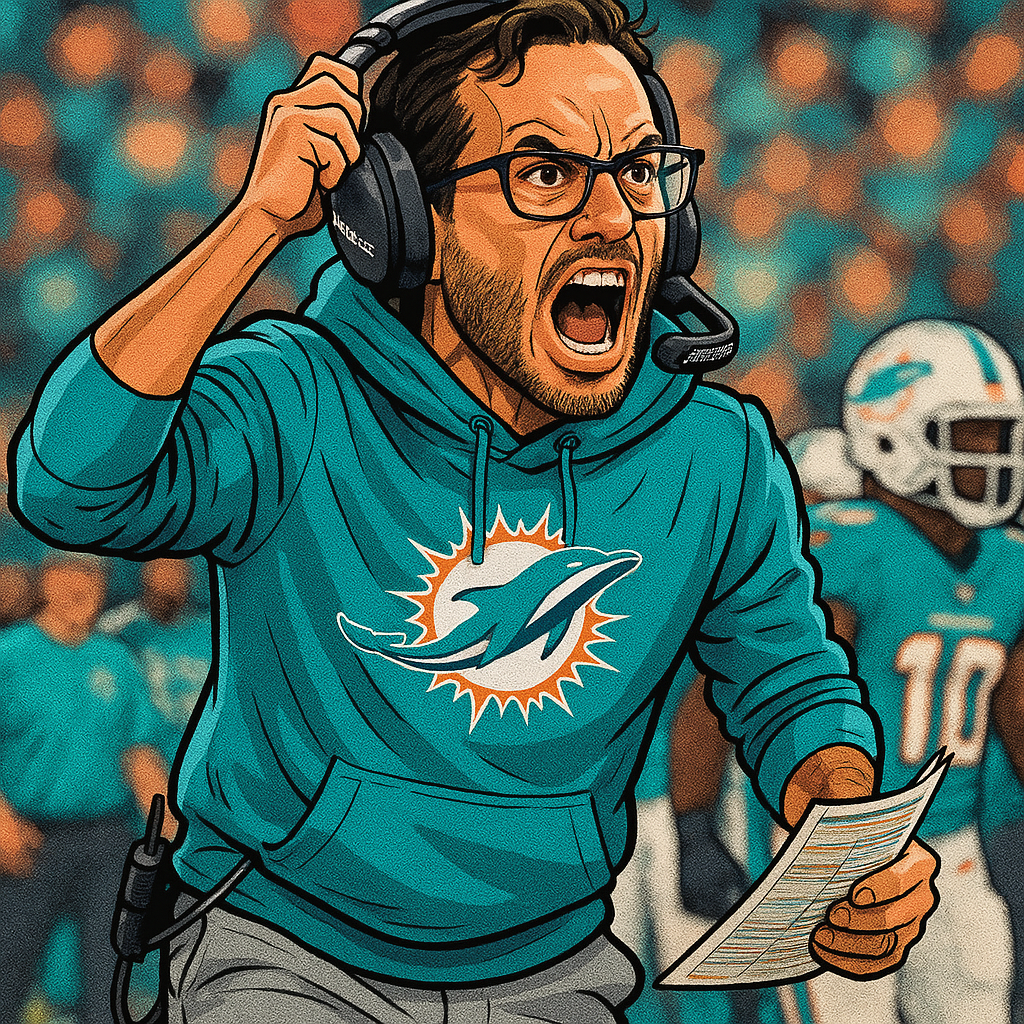
There’s something refreshing about hearing a coach break down football not just as a game of schemes and plays but as a nuanced conversation about players, culture, and adaptability. Recently, Miami Dolphins head coach Mike McDaniel shared insights that challenge the often oversimplified narrative that football offenses are merely about executing perfect “X’s and O’s.” This perspective, highlighted in a Reddit discussion on the topic (https://www.reddit.com/r/nfl/comments/1mhbipg/highlight_mike_mcdaniel_on_why_its_not_just_a/), offers a valuable lens through which to understand the modern NFL offense—and why a winning team is more than just drawing up plays on a chalkboard.
More Than A Playbook: The Story Behind Mike McDaniel’s Philosophy
At the heart of McDaniel’s approach is the idea that football offense is an interplay of intelligence, creativity, and trust between players and coaches. Rather than just scripting a series of plays and expecting flawless execution, his philosophy emphasizes tailoring the game plan to the strengths, tendencies, and potential of individual players. For example, the way an offense might look in Week 1 is less about forcing a rigid scheme and more about adjusting to what the team is comfortable doing and how they can exploit opponents’ weaknesses.
This “player-first” mentality resonates with the narratives of other innovative coaches. Andy Reid, for instance, is known for playing to his quarterback’s strengths, rather than locking into a single static approach. Reid once told Sporting News, “My goal is to make the players better, not just install a system they can’t flourish in.” McDaniel’s Dolphins have reflected this as they’ve integrated young talents and veterans alike, making adaptations weekly.

Why It’s Not Just About The Drawups
The criticism often lobbed at newer offensive styles is that they try to do too much or rely heavily on up-tempo and quirky schemes to disguise weaknesses. McDaniel pushes back against this by explaining that the evolution in offense isn’t about elaborate trickery but about creating space and opportunities for genuine football playmakers.
This emphasis aligns with former Michigan head coach Jim Harbaugh’s thoughts on offense, who once noted that “football is about putting your players in the best positions to succeed.” McDaniel’s offense may look complex on the surface, but underneath it’s grounded in a simple, pragmatic principle: create easier decisions for each player, thereby improving execution under pressure.
Some skeptics argue that this approach risks being too reactive—shifting a lot from game to game without mastering one system. Yet McDaniel’s success with the Dolphins suggests that modern offenses must be flexible. NFL defenses are fast, smart, and ever-changing. Sticking strictly to one “system” can make offenses predictable and vulnerable.

The Human Element: Trust and Communication
What really elevates McDaniel’s insight is his focus on relationships within the team. Football is as much mental as physical. A coach who trusts his quarterback to make decisions on the fly and a quarterback confident enough to adjust plays at the line of scrimmage builds a dynamic offense. This interplay can’t be captured simply by running standard plays over and over.
This reminds me of an anecdote from the early days of the West Coast offense under Bill Walsh. Players were given responsibility to read defenses and adjust plays accordingly. That trust created a sense of ownership and elevated the team’s overall performance.
McDaniel’s comments echo that same sentiment. In his mind, the X’s and O’s are just the canvas—the real art is in preparing players to paint strategically during the unfolding game, not just reciting a script.

Balancing Act: The Limits of Flexibility
While McDaniel’s views champion adaptability and player-centric strategy, it’s vital to recognize that this approach demands high football IQ and chemistry—luxuries not every team has. Sometimes, sticking to a simpler, well-practiced scheme produces better results, especially for inexperienced squads.
Take the example of the New England Patriots under Bill Belichick, who thrived on putting players in proven roles and executing fundamentals near perfectly. Belichick’s teams often used deceptively simple schemes executed at a high level, proving that sometimes less can be more.
Therefore, McDaniel’s flexible, player-first offense isn’t a panacea; it’s part of a broader toolbox. Coaches must balance scheme complexity with the makeup of their roster and their weekly opponent. That pragmatic mindset is key to consistent success.

Looking Forward: The Future of NFL Offense
Mike McDaniel’s insights signal a shift in how we should view offensive football. It isn’t just about drawing up complicated plays filled with motion and misdirection, but about blending strategy with the human side of the game.
As the NFL continues evolving—with rising athlete versatility and new data analytics—this balance between scheme and player empowerment will become even more crucial. Coaches who can master this balance, like McDaniel aims to, will likely have the edge.
For NFL fans and analysts alike, embracing this nuanced mindset enhances our appreciation for what goes on each Sunday. Football, at its best, is both a strategic chess match and a testament to teamwork and trust.
For more thoughts about evolving NFL offenses and great coaching philosophies, check out this deep dive on Andy Reid’s adaptive strategies by The Ringer: https://www.theringer.com/nfl/2023/2/6/23688660/andy-reid-kansas-city-chiefs-offense-philosophy
And Bill Barnwell’s piece on balancing system versus personnel for ESPN lays out the complexity nicely: https://www.espn.com/nfl/story/_/id/31492797/nfl-roster-building-architecture-systems-personnel
Have your own take on NFL offensive schemes? Join the conversation over on Reddit’s r/nfl forums, where coaches, players, and fans debate the game’s intricacies week in, week out.
[IMAGE SLOT: Football huddle showing camaraderie]
Football may be a game of X’s and O’s on the surface, but as Mike McDaniel reminds us, the real story is always more human, more adaptive, and ultimately, more inspiring.

 NFL FOOTBALL NEWS
Leave a comment