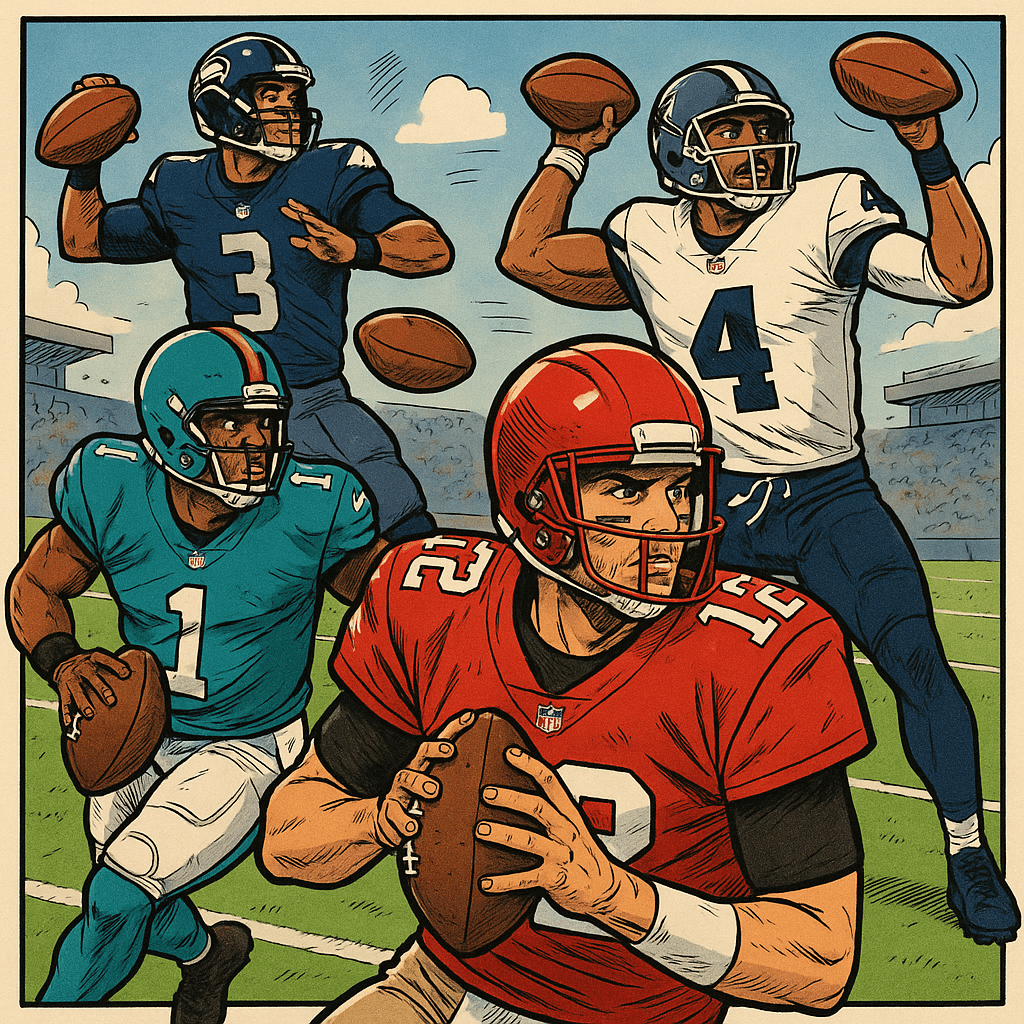
Why tiering NFL quarterbacks is more art than science — and what it means for the next NFL season
Each NFL offseason, fans and analysts alike dive into ranking and tiering quarterbacks, dissecting their skills, potential, and impact on their teams. Recently, Sandos released an updated NFL QB tiers list for the 2025-26 season on Reddit, sparking plenty of discussion—and it’s a great lens to examine where the quarterback landscape currently stands and where it might be headed.
Understanding the Tier Concept: More Than Just Rankings
Sandos’s tiers approach divides quarterbacks into several groups rather than a simple 1-32 ranking. This method acknowledges the substantial differences within the quarterback class—elite talents, solid starters, developmental prospects, and those struggling to find their footing. The tiers themselves offer a snapshot of NFL decision-makers’ challenges when evaluating players under pressure.
It’s tempting for fans to want a definitive list: Is QB X better than QB Y? But real life rarely fits into a neat numeric order, especially in football. Quarterbacks operate within systems, face varying defenses, and their success often hinges on factors outside their control.
One good example is Justin Herbert. He frequently appears in the upper tiers for his accuracy, arm talent, and poise under pressure, but some question if the Chargers’ offensive weapons and system inflate his numbers. When you consider these aspects, tiering becomes a tool to factor in both raw talent and context.
Tier 1: The Elite — Clear Franchise Cornerstones
The top tier contains the unquestioned franchise quarterbacks. These are players who consistently elevate their teams, perform in high-leverage moments, and usually possess rare traits like elite athleticism combined with sharp decision-making.
Names typically associated with this group include Patrick Mahomes, Aaron Rodgers (if still playing), Josh Allen, and Joe Burrow. They define what a modern NFL quarterback looks like: accuracy, mobility, good pocket presence, and clutch instincts.
What makes these quarterbacks stand apart is their impact on a game’s outcome. The margin between winning and losing often rests on their shoulders. Trevor Lawrence, too, is pushing into this category, with clear progression and a growing command of the Jaguars’ offense.
Yet, even here, debates exist. Some argue that Mahomes’s tier-one status carries weight because of the Chiefs’ offensive scheme, which might be quarterback-friendly compared to other teams’ systems. Others insist that the best quarterbacks thrive regardless of play calls, pointing to Brady’s success across different environments.
Tier 2: Solid Starters with Room to Grow
This tier reflects players who can lead an NFL franchise but haven’t demonstrated the consistent elite level seen at the top. They may have flashes of greatness but also notable flaws or inconsistencies.
Players like Kirk Cousins and Derek Carr have often been placed here. While they boast solid career performances, they sometimes struggle in crucial moments or lack the elite traits needed to bring championship rings.
The question with these quarterbacks is whether they can evolve. For example, if a player improves decision-making under pressure or becomes a better fit in an optimized offense, they might push upward. But if they plateau or regress, the pressure mounts for teams to find upgrades.
Tier 3 and Below: Developing, Journeymen, and Question Marks
Lower tiers capture developmental young QBs, veterans battling decline, or those whose performance is highly situational. It’s a mix of prospects with raw potential and proven starters having a down year.
Zach Wilson or Malik Willis might be in this tier—young arms with promising tools but questions about consistency and leadership.
Then, there are veterans like Sam Darnold or others who have struggled to find lasting success in starting roles. They highlight how even talented athletes face difficulties adapting to the NFL’s speed and complexity.
The volatility here adds drama to NFL seasons. A third- or fourth-tier quarterback could rise as a surprise star, or conversely, an expected leader may fade, prompting roster shake-ups and renewed draft pursuits.
Balancing Optimism and Realism
For fans and teams alike, QB tiers provide a roadmap but never a crystal ball. I’ve learned that the most pragmatic approach combines recognizing each player’s strengths with honest acknowledgment of their limits.
The tiers aren’t static. Young stars can climb quickly, while veterans may slip down unexpectedly. Injuries, coaching changes, and system tweaks all influence trajectories.
As ESPN’s Mina Kimes notes in her article “The evolving art of QB evaluation,” it’s “critical to read tiers as fluid, not fixed. They’re snapshots of where players stand but don’t dictate their destinies” (https://www.espn.com/nfl/story/_/id/33359507/qb-tier-evolution).
Why It Matters for the Upcoming 2025 Season
Looking ahead to 2025, understanding these tiers can help fans set expectations and promote more nuanced conversations. When a team drafts a quarterback, signs a free agent, or faces the prospect of a trade, tier placement gives clues to that player’s likely role and impact.
Take a team like the Denver Broncos. Depending on where their quarterback slots in, they may invest heavily in surrounding talent to mitigate limitations or purchase further picks to build a new contender.
Ultimately, tiering highlights football’s greatest truth: no player wins alone. A quarterback’s tier is a useful shorthand, but NFL success hinges on coaching, teammates, scheme, and sometimes, just a little bit of luck.
[IMAGE SLOT: “Coach and quarterback discussing plays on the sidelines — emphasizing collaboration”]

Wrapping Up: Tiers as a Starting Point, Not the Final Word
Sandos’s NFL QB tier list is a valuable piece that helps paint the complex quarterback picture. But it’s important to approach such rankings with openness and perspective.
The game is won and lost on Sundays, not in spreadsheets. And while tiers offer clarity, they also remind us how intricate quarterback evaluation really is.
The next few seasons promise shifts that will redefine tiers. We’ll likely see new stars born, veterans reinvented, and perhaps even unexpected careers revived.
As evaluators and fans, embracing both the certainty and uncertainty of QB tiers is the best way to enjoy the ever-evolving NFL landscape.
References & Further Reading:
Sandos’s NFL QB Tiers 2025-26 Edition (Reddit): https://www.reddit.com/r/nfl/comments/1mnblll/free_to_read_sandos_nfl_qb_tiers_202526_edition/
Mina Kimes, “The evolving art of QB evaluation,” ESPN, 2023: https://www.espn.com/nfl/story/_/id/33359507/qb-tier-evolution


 NFL FOOTBALL NEWS
Leave a comment